Eco Hub • Green clothes – with a theatrical flourish
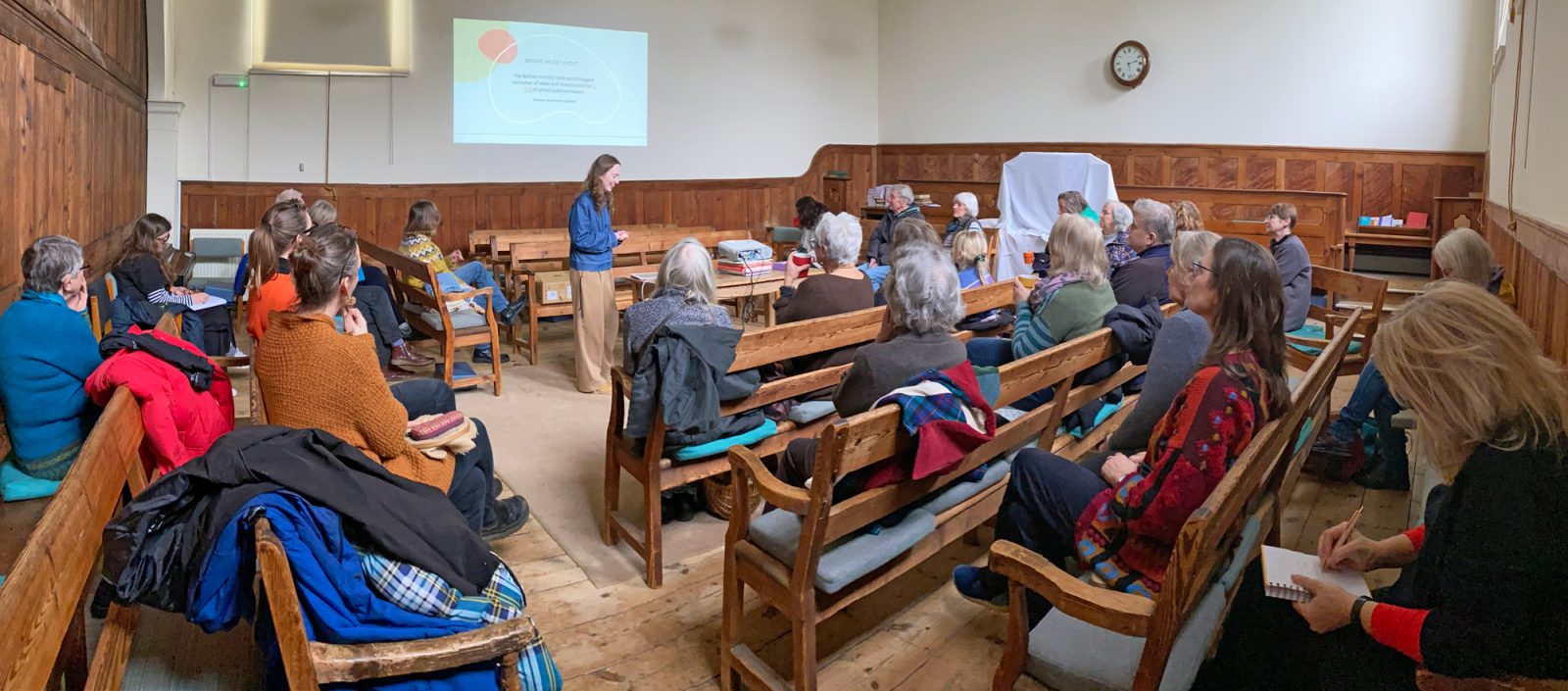
Aurora Street giving a presentation on Sustainability in Fashion and Costume
The February Eco Hub was a busy one, with almost 30 people in the Large Meeting Room for a talk by local woman Aurora Street, a trainee fashion buyer at the National Theatre.
In her work at the National Theatre, Aurora is part of a long process that takes costumes from drawing board to the stage. This may require sourcing fabrics and finding appropriate patterns, scouring costume hirers’ warehouses or trawling through websites looking for an item of clothing that matches the designer’s sketches. Once made or found, the clothes can go through several stages of fittings and even ‘breaking down’, where they are treated to look worn. Aurora spoke of the theatre’s in-house textile team, whose responsibilities range from dyeing costumes to coating them with mud to reflect the story they will help illustrate.
The National Theatre hires costumes from the likes of Angels Costumes in London, but it also has a massive selection of its own, amassed over the years and now carefully stored in a controlled environment. Accessories need to be source, too. With a 30-person play potentially requiring 60 pairs of shoes, the theatre is lucky to have a basement roomful to choose from – twice the size of the Large Meeting Room, according to Aurora. It has even planted its own natural dye garden, growing plants that can be used to colour natural fabrics.
Along with a number of other major venues, the National Theatre has committed to the Theatre Green Book (https://theatregreenbook.com/), which helps organisations develop more sustainable productions, operations and buildings.
Closer to home
Fashion, Aurora told us, is the second biggest user of water and responsible for 2-8% of global carbon emissions. Like the National Theatre, we can minimise environmental damage by buying second-hand clothes – natural fabrics are best. In addition to charity shops, websites and apps such as Vinted, Ebay and Depop are a great way to buy and sell used clothes. Vestiaire Collective is a fantastic source of worn designer clothing.
It is also important that we take care of the clothes we already own. Aurora suggested looking on websites such as Pinterest for videos on how to darn or patch. She also recommended special filters in washing machines to reduce micro fibre pollution.
Not everyone is interested in fashion, but everyone wears clothes. With the rise of fast fashion and greenwashing, being mindful of where we buy our clothes, what fibres they’re made from, how we care for them and how long we wear them is key to a sustainable life!