The Circular Dorking Blog
Eco Hub • Swifts
27th October 2026
Getting Serious About Swifs
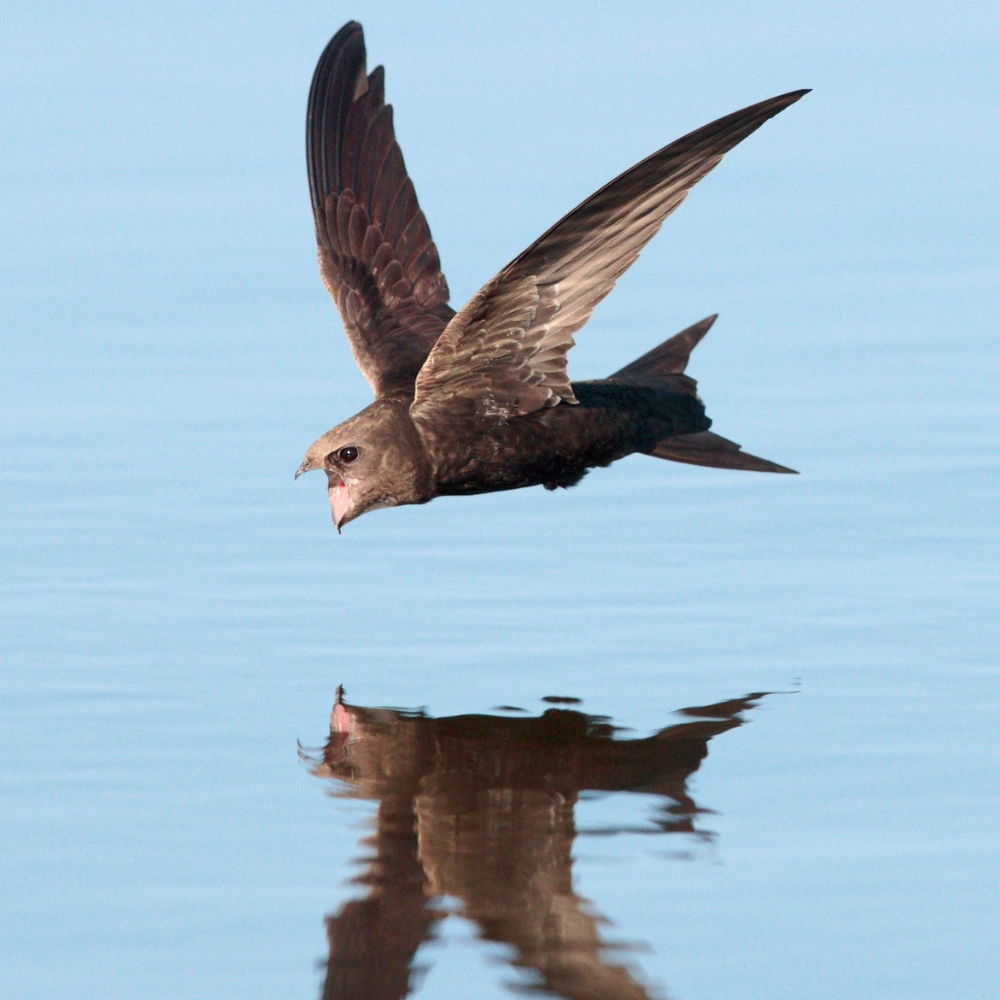
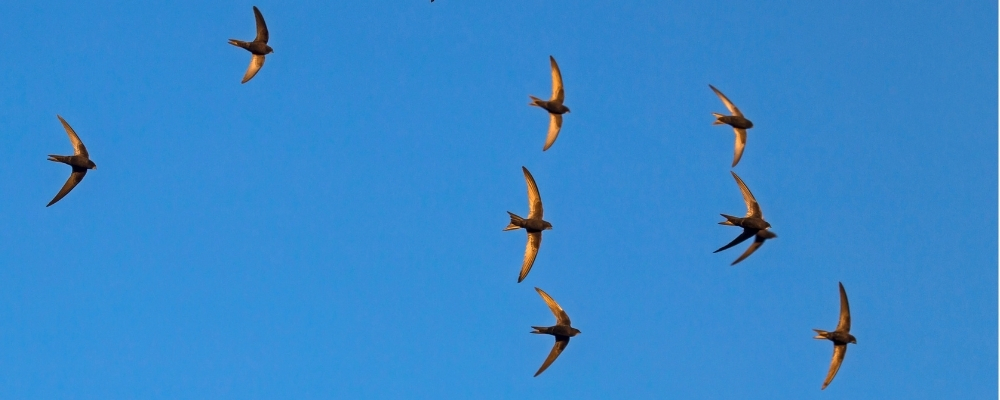
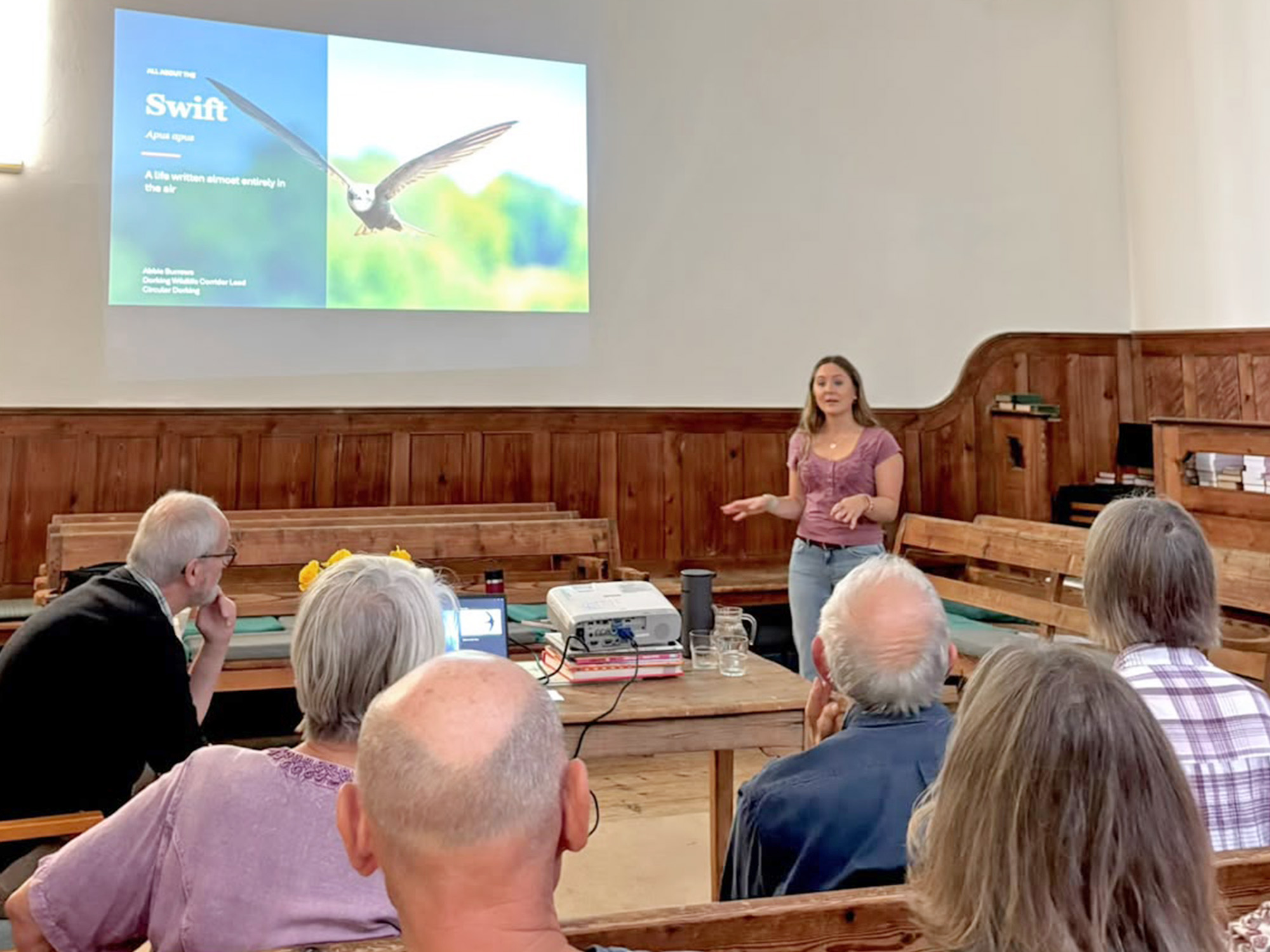
The theme of the October Dorking Eco Hub was ‘swifts’, and an enthralled audience listened as Circular Dorking swift expert Abbie Burrows project lead on the Dorking Wildlife Corridor project, dazzled us with facts about the birds (Latin name: Apus apus). Weighing 36-50g, similar to a golf ball, the common swift measures 16-17cm, has a wingspan of 42-48cm and has been recorded flying at up to 69mph. The fastest straight flying bird in the UK, the swift walks only during the nesting season.
The common swift has a ‘boomerang silhouette’. Spending 99% of its non-breeding time airborne, the swift can fly from the UK to Africa without landing. It eats insects, skims water from ponds, and sleeps while flying – practicing unihemispheric slow-wave sleep, meaning that one half of the brain rests while the other remains alert. A swift can fly 5,000 to 6,000 miles a year.
Adult swifts return to their breeding sites in late April. Two to three eggs are laid in May. June and July are spent feeding the newly born chicks, which leave the nest and fly south in early August.
A 15-year-long study found that 95% of swifts return to the same breeding site each year. Britain has lost seven of every ten swifts. This is due to nest holes in buildings being sealed shut, fewer flying insects for swifts to eat, and extreme weather.
Abbie cautioned us not to disturb nesting swifts. Instead, she urged us to become ‘swift champions’ and to work with neighbours to monitor and protect local swift colonies.
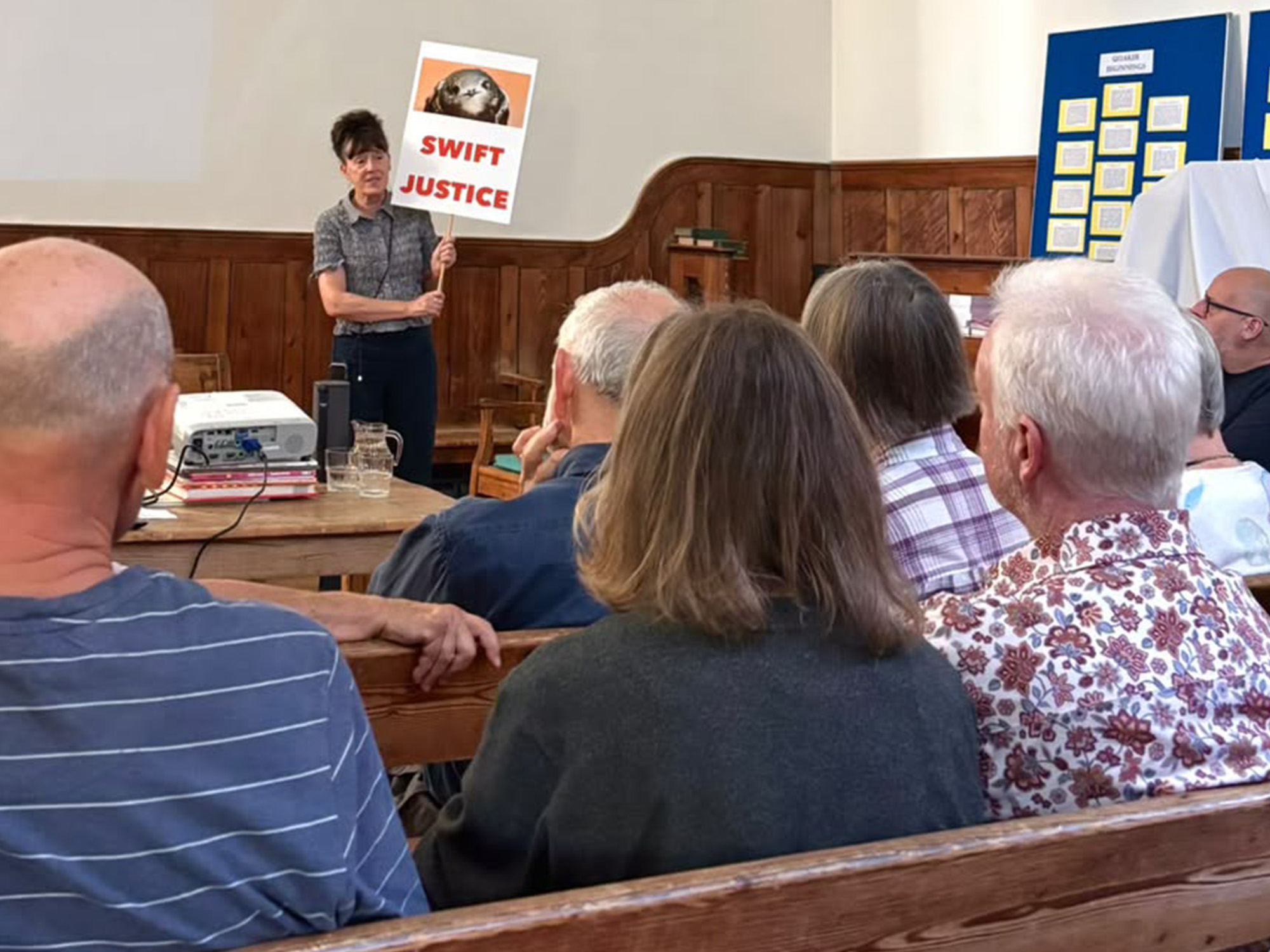
Swift Justice
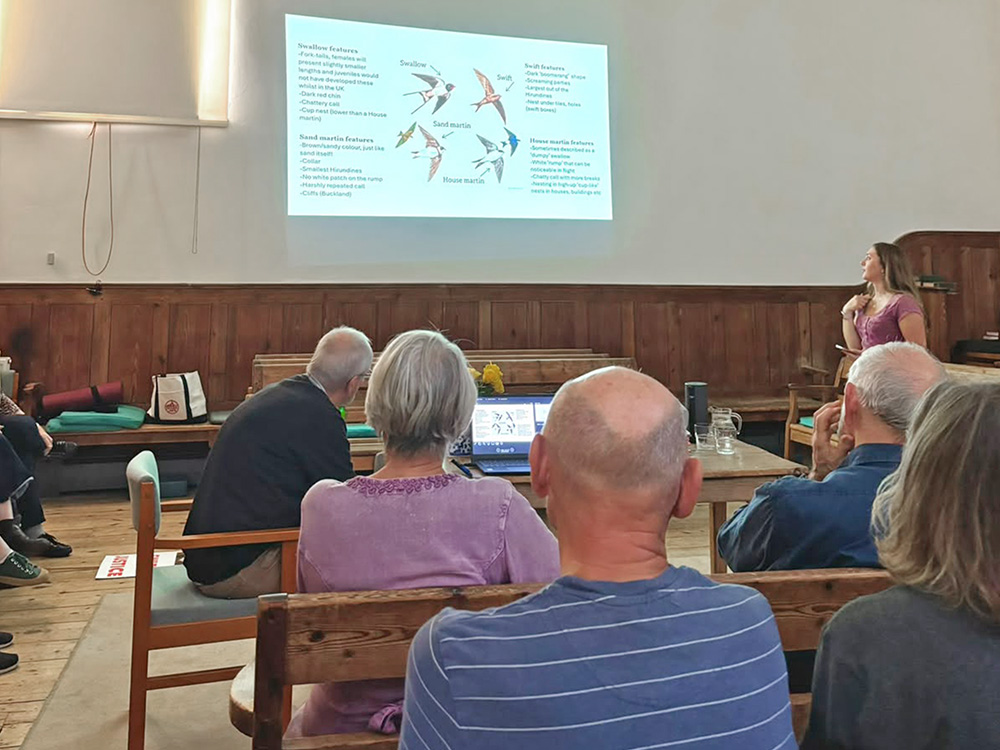
Local artist and climate activist Heather Ackroyd took over from Abbie, to tell us about an incident – potentially criminal – that is likely to have a catastrophic effect on Dorking’s swift population. Heather told us how Clarion Housing had demolished its office building (Regent House, next to Dorking Station) in early May 2026 – swift breeding season. There is no convincing record, she said, of any check being carried out at the site before the wrecking balls were brought in.
Heather noted that when established colonies are lost, it is extremely difficult to bring them back. A group of UK activists and barristers known as Lawyers for Animals is investigating the case. Heather stressed that incidents like this are taking place all over the UK.
What can we do?
Sign this petition calling for an investigation into the Regent House incident and an outline of what will be done to prevent similar actions.
Use the RSPB’s ‘swift mapper’ to help map the UK’s swift population.
Author: Sarah Freeman,
The talks took place in September October 2026
Useful Links
Thank you to author
Tara Craig